


Breast Reduction

Breast size, weight, shape, and proportion can affect far more than appearance. For women with overly large or heavy breasts, everyday activities may be accompanied by neck, back, or shoulder discomfort, bra-strap pressure, skin irritation, difficulty exercising, or feeling that their breasts are out of proportion with the rest of their body. Breast reduction surgery in San Antonio is designed to reduce excess breast tissue, fat, and skin while reshaping and lifting the breasts to create a lighter, more balanced contour that complements each patient’s individual anatomy and goals.
Breast Reduction San Antonio – Gallery
Breast reduction isn’t simply about making the breasts smaller. It’s about reducing unnecessary weight while creating a shape that feels balanced with the rest of the body. My goal is to find that balance between comfort, proportion, and a result that still feels naturally yours.

Patient Story:
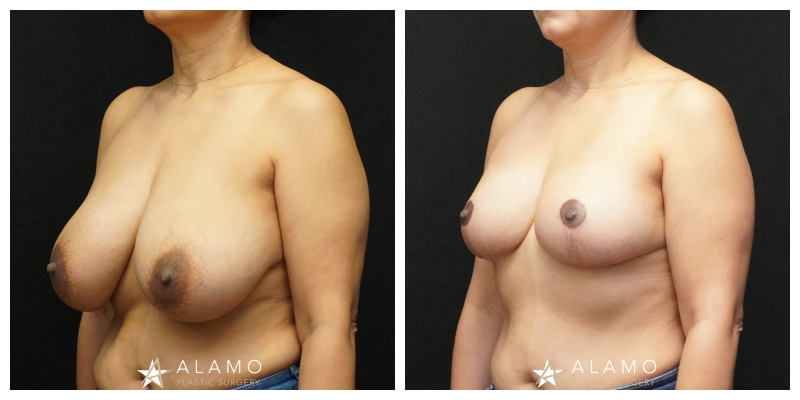
This 51-year-old female was unhappy with her breast shape and size. She had a full mastopexy / reduction (shown 5 months out).
- Breast Reuction
- No Implant
- Age: 51
- Result: 5 months
Patient Story:
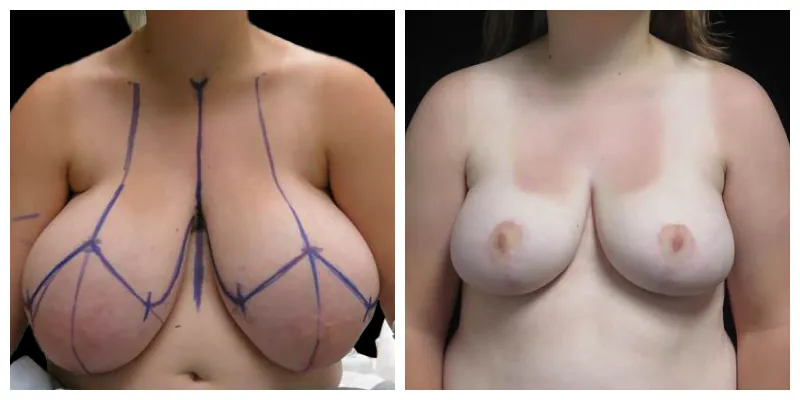
This 18 years old wanted to start her college years off with more 'normal' breasts. She was tired of the stares, and felt uncomfortable wearing normal clothes. One year after breast reduction inferior pedicle and after her freshman year, she is walking upright, chest-out, in whatever clothes she wants, and has dramatically improved confidence!
- Breast Reuction
- No Implant
- Age: 18
- Result:

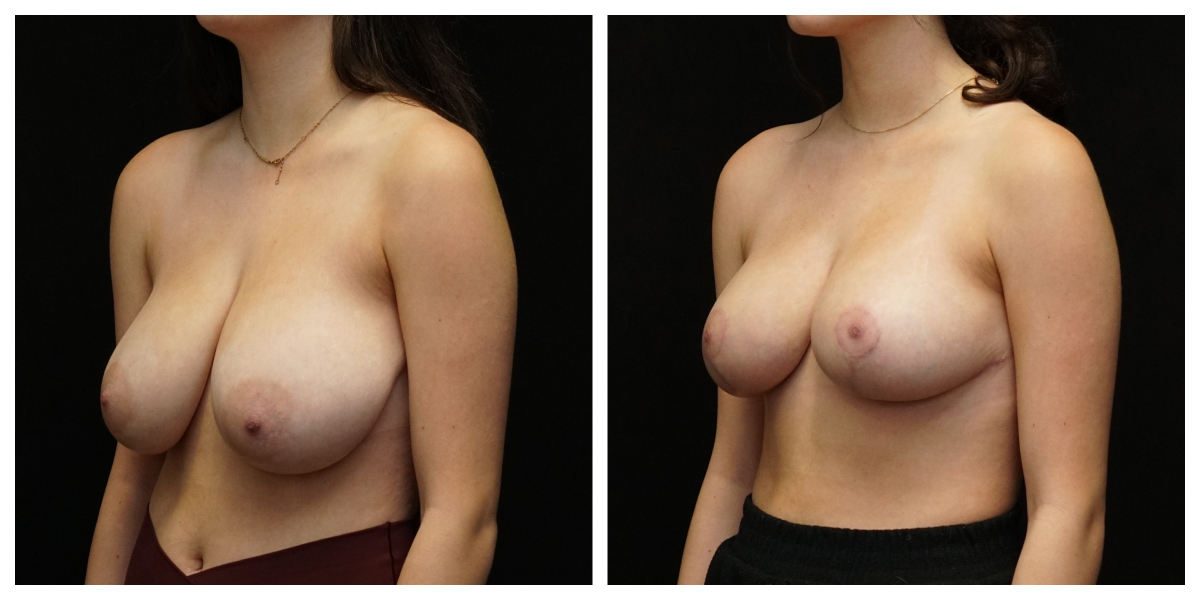
Patient Story:
This 20-year-old female was unhappy with her breast shape. She had a breast lift (shown 4 months out)
- Breast Reuction
- No Implant
- Age: 20
- Result: 4 months














Breast reduction is about more than size — it’s about creating comfort, proportion, and a shape that fits your body.
Every breast reduction is individualized to the patient. The amount of tissue removed, breast shape, degree of sagging, nipple and areola position, skin quality, asymmetry, and the patient’s desired final size all influence the surgical plan. Dr. William Albright approaches breast reduction with both functional relief and aesthetic balance in mind, carefully reshaping the remaining breast tissue while reducing excess volume and repositioning the breast for a more proportionate, natural-looking result.


When your breasts are causing problems such as neck/shoulder/back pain, painful/unsightly grooves in your shoulders, recurrent rashes, or limiting your mobility and activities with exercise, it may be time to consider a breast reduction. By reducing the weight of the breasts, many of these symptoms will improve and possibly resolve completely. Incidentally, Dr. Albright will also be able to create a perkier and more youthful appearing breast by lifting the remaining breast tissue and nipple back up where they belong. Most women undergoing breast reduction surgery are thrilled with their improvement in function and appearance. The most common response Dr. Albright gets from his reduction patients is “I should have done this YEARS ago!” It can change your life! Less well known breast reduction benefits particularly for women with very dense breast tissue is the possibility of detecting an early breast cancer or precancerous lesion, as well as a slight reduction in risk of breast cancer. Get contact with Alamo Plastic Surgery is one of the best plastic surgery clinics for Breast Reduction in San Antonio TX.
Board-certified plastic surgeon Dr. William Albright is an expert in multiple breast reduction surgery techniques. These techniques differ in how the extra skin is removed which determines the scar pattern, as well as how the breast tissue itself is adjusted which affects breast shape. After discussing your goals, Dr. Albright will examine your breasts to identify the best reduction technique for you with particular emphasis on achieving a long-lasting more youthful breast shape.
Alamo Plastic Surgery is an award-winning plastic surgery in San Antonio, TX. Schedule an appointment at (210)-670-5302.


When planning your breast reduction,
there are four important factors to consider:
Is Breast Reduction Right for You?
Breast reduction may be appropriate for women whose breast size or weight causes physical discomfort, limits exercise or daily activities, makes clothing difficult to fit, or feels disproportionate to their frame. Some patients are primarily seeking relief from heavy breasts, while others are equally concerned about sagging, asymmetry, nipple position, or overall breast shape.
During your consultation, Dr. Albright will evaluate your anatomy, breast size and shape, skin quality, degree of sagging, overall health, and personal goals. Together, these factors help determine whether breast reduction is appropriate and what type of result can realistically be achieved.
How Much Breast Tissue Should Be Removed?
Breast reduction is not simply about removing a predetermined amount of tissue or reaching a specific cup size. The goal is to create a breast size and shape that is more comfortable and proportionate to your body while preserving an aesthetically balanced contour.
During surgery, excess breast tissue, fat, and skin may be removed, and the remaining tissue is reshaped to create a lighter, more lifted breast. The nipple and areola are typically repositioned to better align with the new breast shape, and an enlarged areola may be reduced when appropriate. The exact technique and amount of reduction depend on your anatomy, goals, and surgical plan.
What Should You Expect After Breast Reduction?
Breast reduction requires incisions, and permanent scars are an unavoidable part of the procedure. The incision pattern depends on the amount of reduction required, the degree of sagging, and the technique selected for your anatomy. Scars generally change and mature over time, although their final appearance varies from patient to patient.
Swelling, bruising, tightness, and temporary changes in breast or nipple sensation can occur during recovery. Activity is gradually increased as healing progresses, while strenuous exercise and heavy lifting are restricted until Dr. Albright determines that it is safe to resume them. During your consultation and postoperative visits, you will receive instructions tailored to your procedure and recovery.
The cost of breast reduction varies because each procedure is customized to the patient’s anatomy and surgical needs. Factors such as the complexity of the procedure, surgical technique, anesthesia, and facility requirements can affect the overall cost.
After your consultation and personalized surgical plan, our team can provide detailed pricing information and explain available financing options. If you are considering breast reduction for functional symptoms, you may also wish to contact your insurance provider directly to understand your individual coverage requirements and benefits.
Frequently asked questions about breast augmentation
For adolescent women, there are those who are “early bloomers” and develop very large and heavy breasts before their peers. Many of these young women become self-conscious in common social situations like sports or swimming, and may even withdraw from their friends and families. Often, they find it difficult to discuss these issues with their families, as they may feel too “embarrassed”. They may have unrealistic fears about the risks of breast reduction surgery, specifically scarring, recovery, future breast feeding potential, or getting “botched”. It does not have to be this way! Some of Dr. Albright’s happiest patients are young women with “juvenile breast hypertrophy” or “gigantomastia” who have decided to improve their lives with breast reduction surgery. He is one of the best surgeons for breast reduction surgery. Come learn more today.
Breast reduction surgery may or may not be covered by your insurance plan. Insurance plans differ in the inclusion and exclusion criteria for who may qualify for a breast reduction. More confusingly, the coverage criteria can change over time, even within the same carrier. It is important to remember that insurance plans only cover for a WEIGHT of tissue to be removed, not a specific VOLUME. Some women have large droopy breasts that are not very dense or heavy. Alternatively there are those women who have breasts with less droopiness and volume, but their breast tissue is very dense and heavy. Dr. William Albright, one of the best surgeons for breast reduction surgery, will assess these risks and will be happy to give you his honest opinion.
Dr. Albright recommends you contact your insurance provider to see what criteria must be met for coverage and who is an in-network or out-of-network provider, as your direct costs may vary significantly. Currently Dr. Albright does not accept any insurance and is everything is considered cosmetic. As deductibles continue to rise, the possibility of performing your breast reduction as a cosmetic procedure (pay everything out-of-pocket) may be more affordable than many suspect. Contact our office to find out more.
Unfortunately, there is no published technique that will reliably maintain a rounded and full superior pole of the breast. Techniques can occasionally create this look in the short-term, but rarely is it maintained long-term. The only way to reliably obtain and maintain superior pole fullness is a breast implant.
The most frequently used scar pattern by Dr. Albright is a Wise pattern or ‘Inverted T’ scar. This places a scar around the areola (pigmented skin around the nipple) often helping to reduce the size of the areola to a more youthful size. There is another vertical scar from the bottom of the areola to the bottom of the breast (the breast fold) where the breast meets the chest wall. Finally there is a side-to-side scar along this lower breast fold, that is variable in length depending on how much skin has to be removed. The Wise pattern reduction has been shown to create a more cone-shaped breast with better projection from the body, when compared with other types of skin patterns. Dr. Albright will describe the procedure for you to better understand why one procedure may be better than another.
The scars tend to widen slightly as they mature, particularly along the breast fold incision and T-point. Occasionally patients may develop hypertrophic scars or even keloid scars. Both are raised scars. However, hypertrophic scars are more easily treated, typically with steroid injections. Keloid scars are much more difficult to treat, and this is why Dr. Albright will generally discourage breast reduction surgery in patients with a family history of keloids.
Most patients have excess skin and subcutaneous fat that continues from the side of the breast around to the bra along the path of a bra strap. This tissue is not breast tissue and therefore is not removed with a breast reduction. However it can be removed with an additional cosmetic procedure such as liposuction with or without an upper back lift. This means that occasionally patients may have some redundant excess skin and fat located under the arm along the path of a bra strap, and this is called a ‘dogear’ or a standing-cone deformity.
For the vast majority of patients, Dr. Albright is able to leave the nipple attached and NOT have to perform a free nipple graft. A free nipple graft is when the nipple and areola are cut-off from the body as a unit and then reattached to another location on the breast like a skin graft. The consequences of such a procedure are loss of erogenous sensation, ability to breast-feed, erectile function of the nipple and some pigment loss of the areola. There is also a very small chance of complete loss of the grafted nipple and resulting scarring.
Fortunately, if it was not planned before surgery, it is very rare to need a free nipple graft during surgery. Dr. Albright will discuss the likelihood of this with you at your appointment. If the nipple is left intact at the time of surgery, approximately one-third of patients will develop permanently decreased sensation of one nipple, and not both. Additionally, although Dr. Albright can not guarantee one’s ability to breast-feed after breast reduction surgery, most of his patients are able to breast-feed after breast reduction surgery if they desire.
Schedule a Consultation
for Breast Reduction
To schedule a private consultation with Dr. Albright, please call the office or request an appointment online. We welcome your visit.
Your submission has been received and we will reach out to you soon!!


