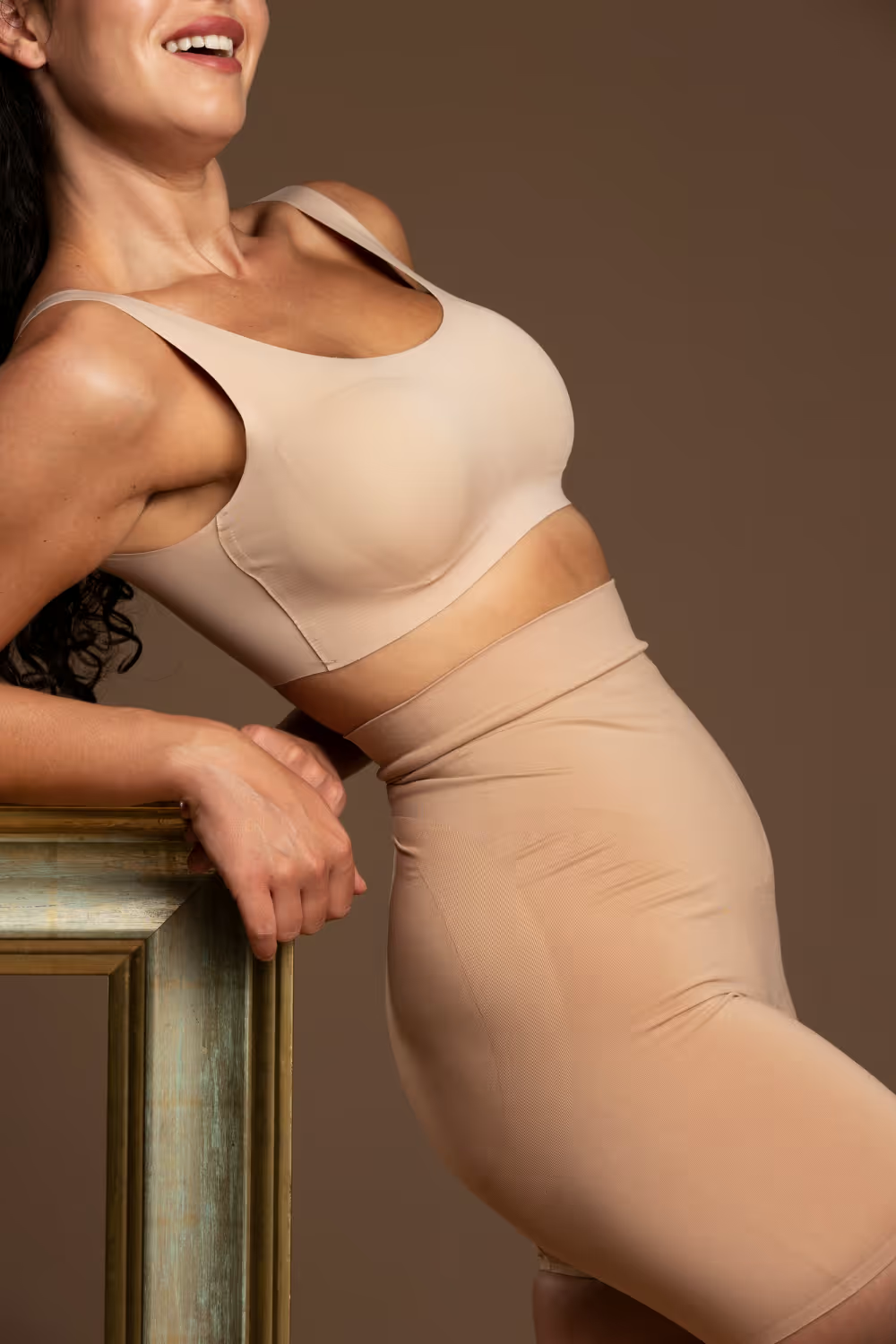
Breast Enhancement
Breast augmentation has undergone a noticeable shift over the past several years. While implants remain the foundation of surgical breast enhancement, patient expectations have changed significantly. By 2026, the focus is no longer on volume alone, but on natural contours, soft transitions, long-term harmony with the body, and personalized results.
This evolution has led to the growing adoption of hybrid breast augmentation, a technique that combines breast implants with fat transfer. What was once considered a niche approach is increasingly viewed as a modern standard for patients seeking refined, natural-looking outcomes.
This article explores why hybrid breast augmentation is gaining momentum, how it works, who benefits most from this approach, and how surgical techniques continue to evolve to support safer and more predictable results.
Hybrid breast augmentation is a surgical technique that combines traditional breast implants with autologous fat transfer (the patient’s own fat). Instead of relying solely on an implant to create volume and shape, the surgeon uses fat grafting to refine contours, soften implant edges, and improve overall breast aesthetics.
In practice, implants provide the foundational structure and volume, while fat transfer is used strategically to enhance shape and achieve a more natural appearance. This layered approach allows for greater artistic control and customization.
Several key trends are driving the increased demand for hybrid techniques.
Modern patients are seeking breasts that look and feel proportionate to their frame. Hybrid augmentation allows surgeons to avoid an overly augmented appearance by blending implants seamlessly with surrounding tissue.
Patients no longer want “one-size-fits-all” results. Hybrid augmentation supports individualized planning based on chest width, tissue quality, skin elasticity, and lifestyle.
Improved fat harvesting, processing, and injection methods have made fat transfer more reliable, with higher graft survival and smoother results than in earlier years.
Fat transfer can improve breast softness and camouflage implant edges over time, especially in patients with thin breast tissue.
Hybrid breast augmentation typically involves two coordinated surgical steps.
The implant provides the primary volume and shape. Surgeons carefully select implant type, size, and placement based on the patient’s anatomy and goals. Proper implant selection is essential to ensure balance and long-term support.
Fat is harvested via liposuction from areas such as the abdomen, flanks, or thighs. After processing, the fat is carefully injected into specific regions of the breast to:
Fat is placed in thin layers to maximize survival and maintain healthy blood supply.
Fat transfer adds a soft tissue layer over the implant, reducing sharp contours and helping the breast move more naturally with the body.
Surgeons can fine-tune shape beyond what implants alone can achieve, particularly in the upper pole and cleavage area.
Patients with limited natural breast tissue often benefit from fat coverage that reduces visible rippling or implant edges.
Because fat is harvested through liposuction, patients experience additional contouring in donor areas.
Hybrid techniques can reduce the visual impact of implant aging over time by maintaining soft tissue coverage.
Hybrid breast augmentation is particularly well suited for patients who:
It is also commonly chosen by patients undergoing implant revision, especially when additional tissue coverage is needed.
Hybrid augmentation requires more detailed preoperative planning than traditional implant-only procedures.
Successful outcomes depend heavily on surgeon experience and careful intraoperative judgment.
Recovery from hybrid breast augmentation combines elements of both implant surgery and liposuction recovery.
Transferred fat requires time to establish blood supply. Patients are advised to:
Final breast shape continues to refine over several months as swelling resolves and fat stabilizes.
Implants provide long-term volume stability, while fat grafting enhances contour and softness. While some fat resorption is expected, modern techniques allow surgeons to plan for this and maintain reliable outcomes.
Patients who maintain stable weight and healthy habits often enjoy long-lasting results with minimal maintenance beyond routine follow-up care.
Unlike implant-only augmentation, the hybrid approach offers:
For many patients in 2026, this balanced approach aligns more closely with modern aesthetic goals.
As plastic surgery continues to prioritize precision, personalization, and natural aesthetics, hybrid breast augmentation reflects where the field is heading. Rather than choosing between implants or fat transfer, surgeons now integrate both to achieve results that are anatomically balanced, visually refined, and aligned with patient expectations.
Hybrid breast augmentation is not about bigger breasts — it is about better-designed results. A consultation with a board-certified plastic surgeon is essential to determine whether this approach aligns with your anatomy, goals, and long-term expectations.
For patients seeking a sophisticated, modern approach to breast enhancement in 2026, hybrid breast augmentation continues to set a new standard.